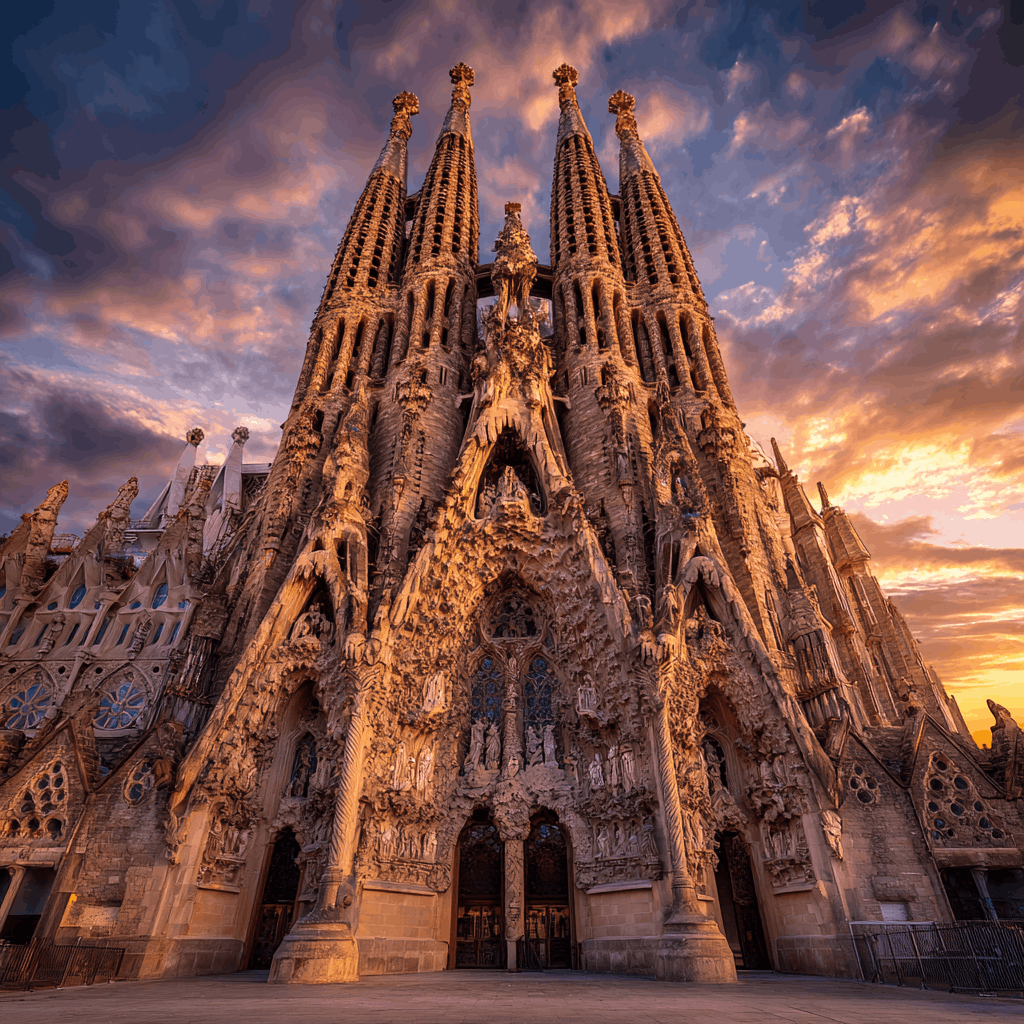
Start with Sagrada Familia, obviously. Still unfinished after 140+ years and somehow that makes it even more insane. Walk up close and your neck hurts from staring: tree-like columns splitting into branches inside, rainbow light exploding through stained glass, facades that look carved by wind and sea. Pro tip, buy the tower ticket for Nativity facade, the tiny spiral staircase and the view down those fruit-covered pinnacles is worth every sweaty step. Mornings are quieter, light hits the Passion facade in a brutal but beautiful way.
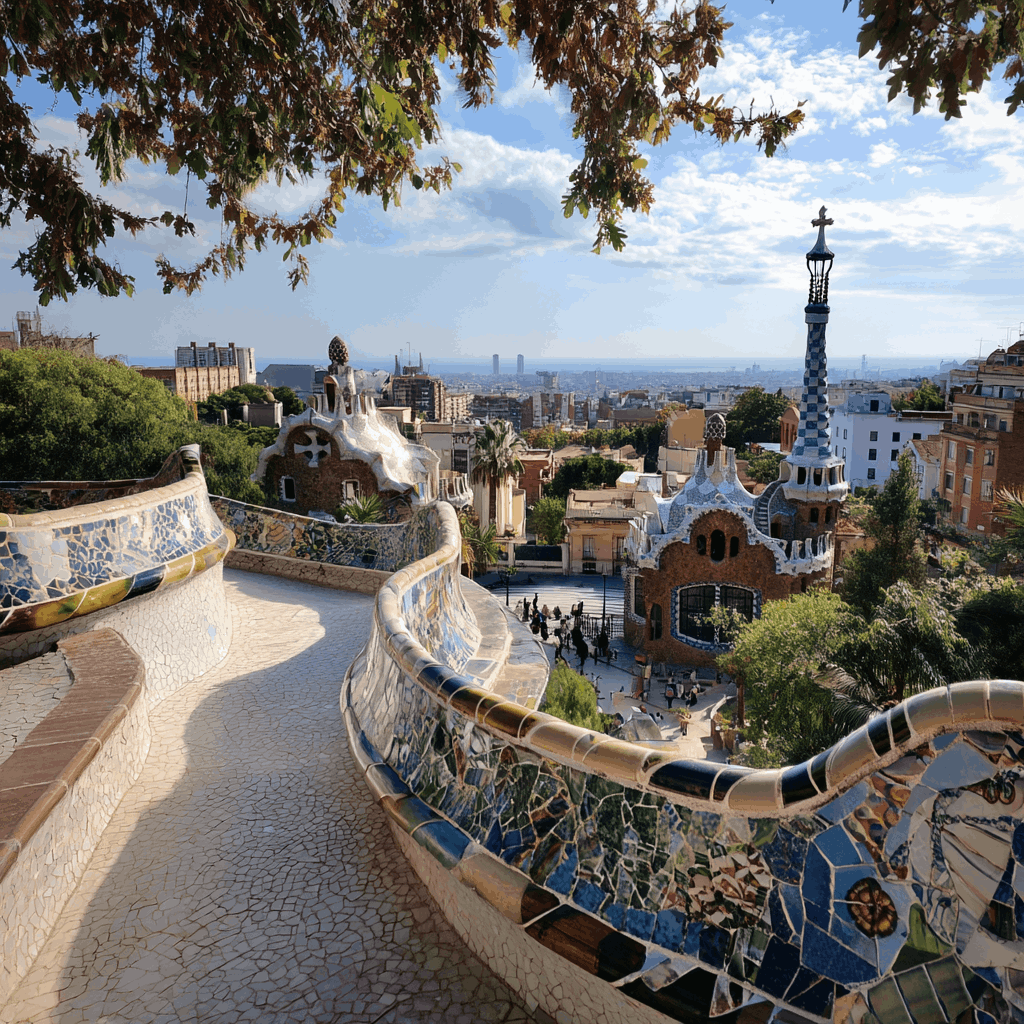
Then hop over to Park Güell. Feels like stepping into a candy-coated dream. That famous lizard dripping with broken ceramics greets you at the entrance, but keep going, the wavy mosaic benches up top are where the magic peaks. They’re ergonomically shaped (Gaudí tested them by sitting workers’ butts in wet clay, no joke) and covered in trencadís shards that sparkle when the sun moves. Sit there at golden hour, look over the city with those gingerbread gatehouses framing everything, and you’ll get why people call this place pure joy in built form.
Casa Batlló is next, my personal obsession. Locals call it the House of Bones because the balconies look like skulls and the roof arches like a dragon spine. Step inside (skip-the-line ticket or you’ll die waiting) and the light well in the center courtyard is painted deep blue at the top, fading lighter as it goes down to make every floor feel sunny. The wooden windows swirl, door handles fit your hand like they were molded for you, even the ventilation shafts are sculpted. Everything flows, nothing is sharp, it’s like living inside a wave.
Don’t sleep on La Pedrera (or Casa Milà) just up the same street. Looks calmer from outside with that undulating stone facade, but the rooftop is straight out of a sci-fi film, those chimney warriors wearing broken-tile masks staring over Passeig de Gràcia. The attic has the famous catenary arches that inspired the Sagrada’s forest columns, super peaceful up there with just brick and light. Go at sunset if you can, the sky turns the same warm tones as the stone and the whole building glows.
One bonus that’s a bit off the main Gaudí trail: Palau Güell, his early masterpiece near La Rambla. Darker, moodier, almost gothic on the outside, but inside the parabolic arches and the wooden ceiling that opens like a star observatory blow your mind. The basement stables with mushroom columns feel underground-cave fancy. Way fewer people than the big hits, so you can actually breathe and take proper photos.
All these places hit different when you realize Gaudí wasn’t just decorating, he was inventing a whole new language of forms taken from nature. Shells, honeycombs, bones, leaves, everything twisted into something useful and beautiful at the same time. Walk away from these spots and suddenly you start seeing the city with new eyes, every curve on every building feels like it’s whispering his name. Barcelona basically is one giant love letter to modernist madness, go read it slowly.